Why Weather-Resistant Farming Drones Are Worth the Investment
Farming Doesn't Pause for Rain, and Neither Should Your Drone
I've spent the better part of a decade working with agricultural drones across the UK, from the damp fields of Cornwall to the windy plains of East Anglia. One thing I've learned is that the weather doesn't care about your spraying schedule. It will rain when it wants, blow when it wants, and fog up just as you're about to map that tricky headland. That's why weather-resistant farming drones have become more than a nice-to-have; they're a practical necessity for anyone serious about precision agriculture.
When I first started, we'd cancel jobs at the first hint of drizzle. The early consumer drones we tried had no business being near moisture. A light shower meant packing up, losing a day's work, and hoping the crop didn't need treatment before the next weather window. But the industry has moved on. The latest agricultural platforms are built to handle real-world conditions, and that shift has changed how we plan and execute fieldwork.
What "Weather-Resistant" Actually Means in Practice
It's easy to assume weather resistance is just about an IP rating, but it's more nuanced than that. Yes, ingress protection matters, especially for the electronics and gimbal. But true weather resistance in farming drones covers a few distinct areas: moisture sealing, corrosion resistance, operational temperature range, and wind tolerance. A drone might survive a downpour but be useless in a 20-knot breeze if its flight controller can't compensate.
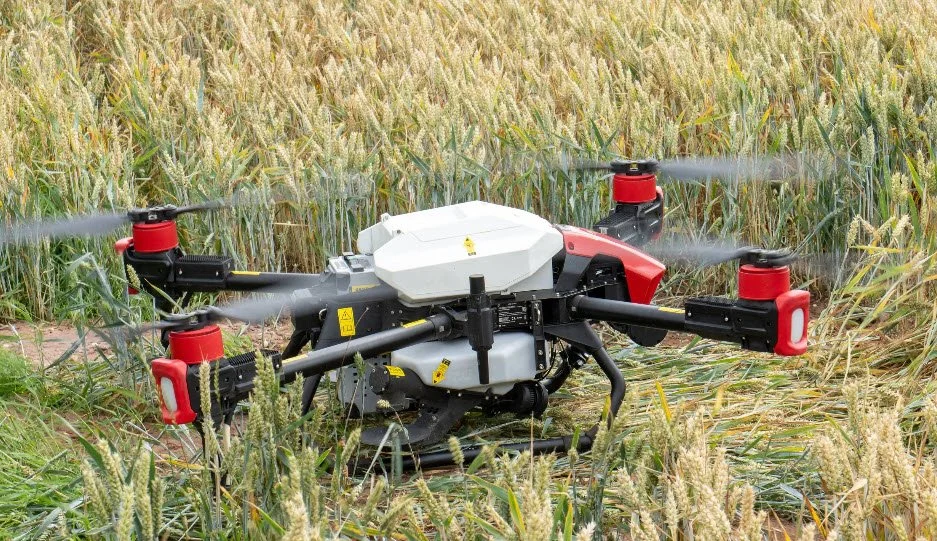
Take the DJI Agras series, for example. These are workhorses designed for spraying and spreading. They feature sealed motors and IP-rated components that handle humid, dusty conditions. I've flown the Agras T30 in light rain with no issues, though I always check the manual's limits. The Yamaha RMax, a veteran of the industry, was built for Japanese rice paddies, where humidity is a constant companion. It's a testament to how long weather resistance has been a consideration in agricultural aviation.
On the mapping side, the senseFly eBee X fixed-wing drone is another good example. It's not just about withstanding rain; it's about flying in gusty conditions that would ground a multirotor. Fixed-wing designs handle wind better by nature, and the eBee X has a rugged build that shrugs off light showers. Similarly, the XAG P100 and AgEagle RX-60 have pushed the envelope with sealed housings and corrosion-resistant materials.
Why Wet Weather Matters More Than You Think
In the UK, we don't have the luxury of waiting for perfect conditions. The growing season is short, and the weather windows for spraying or spreading are often narrow. If you're applying fungicide to wheat and a storm is forecast for the next day, you need to get out there before the rain hits. That's where weather-resistant farming drones earn their keep. They let you work in conditions that would have grounded older models, which means you can hit those tight windows and keep your crop protected.
I remember a job in Shropshire where we had to spread slug pellets across a 20-hectare field. The forecast was iffy, with showers expected by mid-morning. We launched at first light with a drone that had solid weather sealing. We finished just as the first drops started falling. With a less robust platform, we'd have lost the day and the pellets would have gone down late, risking slug damage to the emerging oilseed rape. That's the kind of real-world difference weather resistance makes.
The Trade-Offs You Need to Consider
Weather-resistant drones aren't perfect. They tend to be heavier, which can reduce flight time or payload capacity. The extra sealing and rugged components add weight, and that's a trade-off you have to accept. For spraying, that might mean more frequent battery swaps or smaller tank loads. But in my experience, the reliability in poor conditions outweighs the slight loss in efficiency on perfect days.
Another consideration is maintenance. Sealed drones are harder to work on. When something does fail, you might need to send it back to the manufacturer rather than fixing it in the field. That's a real cost, both in time and money. I've had to ship a unit back to the distributor for a minor sensor issue that would have been a five-minute fix on an older, more open design. But the peace of mind during a wet spring is worth the occasional hassle.
There's also the question of cost. Weather-resistant models are more expensive upfront. But when you factor in the cost of lost days, rescheduling, and potential crop damage from missed applications, the investment often pays for itself in a season or two. For commercial operators, that's a compelling argument.
What the Experts Say
I've talked to several agronomists and drone pilots who've made the switch. Brett Adair, a precision agriculture consultant I met at a conference, put it simply: "If your drone can't handle a bit of rain, you're not really in the business of farming." He's right. Farming is messy, and the equipment has to match the environment.
Companies like Rantizo and Hylio have built their business models around reliable, weather-ready drones. They offer spraying services that can be deployed quickly, even when conditions are marginal. SkySkopes, a drone services company based in North Dakota, has flown in snow and freezing temperatures, proving that with the right equipment, you can extend your working season significantly.
On the sensor side, the MicaSense RedEdge and Parrot Sequoia multispectral cameras are designed to work in less-than-ideal light and humidity. They're not just add-ons; they're integral to the data collection that drives precision decisions. And software platforms like DroneDeploy and PrecisionHawk have built in weather-aware flight planning, so you can assess conditions before you even leave the shed.
Regulatory Considerations in the UK
It's not just about the hardware. In the UK, the Civil Aviation Authority sets strict rules for drone operations, especially for agricultural spraying. You need permissions for aerial application, and those permissions come with weather-related limitations. Flying in rain or high winds might be technically possible, but it's often not allowed under your operational authorisation.
I've had to turn down jobs because the wind was above the limit set by the CAA, even though the drone could have handled it. That's frustrating, but it's also a reminder that weather resistance isn't a licence to ignore safety. You have to balance what the drone can do with what the regulations permit. Always check the latest CAA guidance before you plan any flight, especially in marginal weather.
Real-World Examples of Weather-Resistant Drones
Let's look at a few specific models that have earned a reputation for durability. The DJI Agras T30, for instance, has an IP67 rating on its main body, which means it's dust-tight and can handle immersion in water up to a metre for 30 minutes. That's impressive for a sprayer. The XAG P100 takes a similar approach, with sealed motors and a corrosion-resistant frame. It's also modular, so you can replace parts without exposing the whole system to moisture.
On the fixed-wing side, the AgEagle RX-60 is a rugged option designed for mapping. It's built to be launched by hand and can handle rough landings, which is useful when you're operating in a muddy field. The AeroVironment Quantix is another fixed-wing drone that's known for its durability. It has a unique vertical take-off and landing design and can be flown in light rain, which makes it a great choice for rapid assessments after a storm.
For those who prefer a more traditional multirotor, the Hylio AG-130 is worth a look. It's a heavy-lift sprayer that's built with weather resistance in mind, though it's on the pricier side. And if you're considering a more budget-friendly option, the Farmbot line offers some weather-sealed features, though you'll need to check the specs carefully for your specific needs.
How to Choose the Right Weather-Resistant Drone
When you're evaluating drones for weather resistance, there are a few things I always check. First, look at the IP rating. IP65 or higher is a good starting point for spraying drones, as it means protection against water jets. Second, consider the operating temperature range. If you plan to work in early spring or late autumn, you need a drone that can handle cold and damp.
Third, think about the corrosion resistance of the frame and fasteners. Stainless steel or anodised aluminium is better than plain aluminium. Fourth, check the warranty and after-sales support. A weather-resistant drone is only as good as the company behind it. If they don't offer a solid warranty or quick turnaround on repairs, you could be left grounded for weeks.
Finally, don't overlook the software. A good flight controller will have wind compensation and rain detection features that can help you fly safely in marginal conditions. Systems like those from Sentera and TeeJet Technologies, which specialise in sprayer controls, can integrate with your drone to adjust flow rates based on speed and wind, reducing drift and improving accuracy.
The Future of Weather-Resistant Farming Drones
As the technology evolves, I expect to see even more resilience built into agricultural drones. Battery technology is improving, which will help in cold weather. Materials science is advancing, with more use of composites that are both light and resistant to corrosion. And software is getting smarter, with better predictive models for weather and flight planning.
But for now, the message is clear: if you're relying on a drone that can't handle a bit of British weather, you're going to miss opportunities. The investment in a weather-resistant model, whether it's a DJI Agras, a Yamaha RMax, or something else, is an investment in your ability to do the job when it needs to be done. I've seen too many operators lose money because they couldn't fly in a light drizzle. Don't let that be you.
In the end, weather-resistant farming drones are not just about surviving the elements. They're about thriving in them. They give you the confidence to plan your work without constantly checking the radar. They let you serve your clients better, because you can show up when others can't. And they make the whole business of drone-based agriculture more reliable, which is exactly what the industry needs as we face more unpredictable weather patterns.
So, if you're on the fence about upgrading your fleet, ask yourself this: Can you afford to be grounded every time the sky looks threatening? If the answer is no, then it's time to look seriously at what a weather-resistant drone can do for you. It's not just a purchase; it's a step toward a more resilient farming operation.